
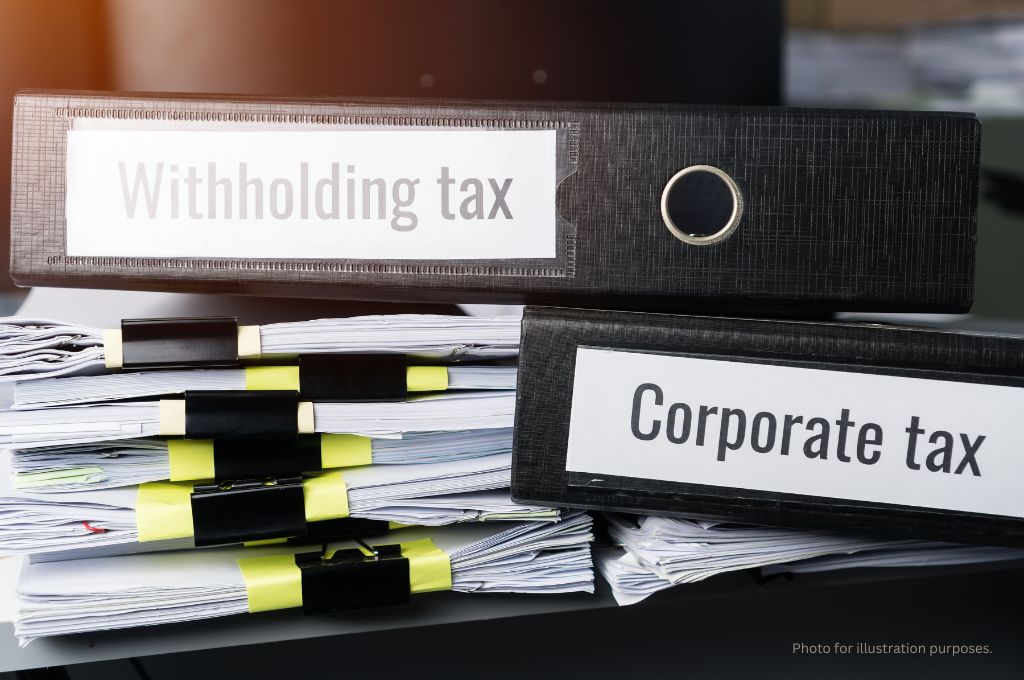
Singapore Corporate Tax Rate 2026: What Every Business Owner Needs to Know
Singapore’s corporate income tax rate is a flat 17% of chargeable income. This applies to both local and foreign companies. Combined with the Start-Up Tax Exemption and Partial Tax Exemption schemes, many Singapore companies — particularly in their first few years — pay an effective rate far below 17%. Budget 2026 has added further relief for the current year of assessment.
HeySara’s accounting and tax team helps Singapore companies file accurately, claim every eligible exemption, and plan ahead for IRAS deadlines.
The 17% Flat Rate: What It Means
Singapore uses a territorial tax system — companies are taxed on income accrued in or derived from Singapore, and on foreign income remitted to Singapore (with exemptions available). The flat 17% rate applies after deducting allowable expenses and reliefs.
There is no tax on capital gains. Dividends paid to shareholders from a Singapore company are exempt from further taxation (one-tier tax system). This makes Singapore particularly attractive for holding structures.
Budget 2026: 40% CIT Rebate for YA 2026
As announced in Singapore’s Budget 2026 (delivered by Prime Minister and Finance Minister Lawrence Wong on 18 February 2026), the government has granted a one-off Corporate Income Tax (CIT) Rebate for the Year of Assessment (YA) 2026:
- 40% rebate on corporate income tax payable for YA 2026
- Total maximum benefit: S$30,000 (rebate + cash grant combined)
- S$1,500 CIT Rebate Cash Grant for active companies that employed at least one local employee (CPF-contributing, excluding shareholder-directors) in calendar year 2025
- Both the rebate and the cash grant are automatic — no application required
- The S$1,500 cash grant will be disbursed by Q2 2026
How it works in practice:
|
Tax Payable (YA 2026) |
40% Rebate |
Total Benefit |
|
S$0 (no profit) — with local employee |
S$0 |
S$1,500 cash grant |
|
S$5,000 |
S$2,000 |
S$2,000 (+ S$1,500 if local employee condition met) |
|
S$40,000 |
S$16,000 |
S$16,000 (+ S$1,500 = S$17,500 if local employee) |
|
S$75,000+ |
Capped |
S$30,000 maximum |
The rebate is automatically applied by IRAS when you file your Estimated Chargeable Income (ECI) or Corporate Income Tax Return (Form C / Form C-S / Form C-S Lite). Do not include the rebate in your ECI submission — IRAS computes and applies it automatically.
Start-Up Tax Exemption (SUTE)
New Singapore companies can benefit from the Start-Up Tax Exemption for their first three consecutive years of assessment:
- 75% exemption on the first S$100,000 of normal chargeable income
- 50% exemption on the next S$100,000
This means a qualifying startup with S$200,000 in chargeable income pays tax on only S$75,000 (S$25,000 + S$50,000), resulting in an effective tax bill of approximately S$12,750 before the YA 2026 rebate.
Eligibility conditions for SUTE: – Incorporated in Singapore – Tax resident in Singapore for that YA – No more than 20 shareholders, where at least one individual shareholder holds 10% or more of the shares – Not in the investment holding or property development sector
Partial Tax Exemption (PTE)
Companies that do not qualify for SUTE (or after the SUTE period ends) can access the Partial Tax Exemption:
- 75% exemption on the first S$10,000 of normal chargeable income
- 50% exemption on the next S$190,000
Enterprise Innovation Scheme (EIS) — AI Expansion from YA 2027
Budget 2026 expanded the EIS to include AI-related expenditure as a qualifying activity for YA 2027 and YA 2028, with a cap of S$50,000 per YA. Qualifying AI expenditure can attract up to 400% enhanced tax deductions or a 20% cash payout option. IRAS is expected to release full details on qualifying AI activities by mid-2026.
This is a significant development for Singapore businesses investing in AI tools, automation, and productivity systems.
Key IRAS Filing Deadlines
|
Obligation |
Deadline |
|
Estimated Chargeable Income (ECI) |
Within 3 months from financial year end |
|
Corporate Income Tax Return (Form C-S Lite) |
30 November of the YA |
|
Corporate Income Tax Return (Form C-S) |
30 November of the YA |
|
Corporate Income Tax Return (Form C) |
30 November of the YA |
|
GST Return (F5) |
Within 1 month of end of each quarter |
Late filing of ECI and tax returns attracts penalties from IRAS. HeySara’s accounting team tracks these deadlines for all clients automatically.
How HeySara Helps
HeySara’s accounting and tax team handles the full corporate tax compliance cycle: bookkeeping, accounts preparation, ECI filing, and annual tax returns. We ensure every eligible exemption — SUTE, PTE, the YA 202
6 CIT Rebate, and EIS — is applied to reduce your tax bill legitimately. We also advise on year-end planning to optimise your chargeable income position.